Result and Discussion
Table 1 shows the results of observations of fish without NBsO2 and with NBsO2
treatment. NBsO2 can improve the water quality. Water with NBsO2 has a higher DO value
than water without NBsO2 treatment, from weeks 1, 2, and 3. According to [11], High DO
levels in water increase fish production. Micro/nano bubbles are a technique for increasing
DO levels quickly. Smaller particle size and larger surface area increase the solubility of DO
in water. Previous research by [7] revealed thatnanobubble technology enhances the
concentration of DO in cultivation water. It can also aid in the processing of both organic and
inorganic waste in cultivation containers by providing dissolved oxygen that supports
microbes responsible for decomposing organic waste.
High DO levels affect water clarity in biofloc ponds. In biofloc ponds with the addition
of NBsO2, the water is clearer than without the addition of NBsO2. Clear water makes it easier
for sunlight to penetrate to the bottom of the biofloc. When fish are exposed to water
containing NBsO2, the increased oxygen availability in the surrounding water is absorbed
through their gills, leading to better oxygenation within their cells.
Table 1. Parameter observed in biofloc without NBsO2 and with NBsO2
.png)
Fish mortality rates were found to be higher in biofloc without NBsO2 treatment. Daily
observations revealed that there were five fish deaths in the biofloc with NBsO2 treatment,
while the ponds without NBsO2 treatment experienced ten fish deaths each day. In the NBsO2
treatment group, five fish died each day, resulting in a total of 105 deaths over three weeks.
In contrast, in the group without NBsO2, there were 10 deaths per day, leading to a total of
210 deaths over the same three-week period, which is quite significant. This demonstrates
that NBsO2 can keep fish alive more effectively than the treatment without NBsO2.
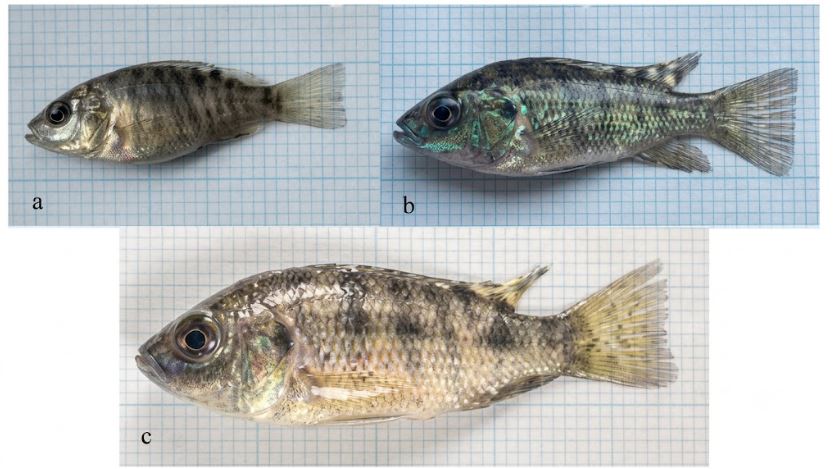
Growth of Tilapia fish with NBsO2 treatment in three weeks shows an increase in size
(Figure 1). NBsO2 enhances water quality, which in turn promotes the growth of fish. NBsO2
creates a more favorable environment for fish because NBsO2 increases the concentration of
dissolved oxygen in water. The oxygen level is important for fish metabolism and respiration,
which can directly lead to improved growth rates, weight gain, and biomass. Improve the
overall health and survival rate of fish, also from high oxygen levels. In the previous research
it was revealed that NBsO2 is stable for a long time in water, and its density is up to two
times higher than normal. Higher fish density results in a significant boost in productivity,
greatly benefiting the industry’s economy. Nanobubbles have antimicrobial properties that
help eliminate pathogens in water, reducing the need for antibiotics and chemicals. They also
improve water quality by oxidizing organic matter and revitalizing nutrients, while
decreasing the organic matter load in aquaculture systems. By enhancing water quality,
nanobubbles lower the frequency of water changes, leading to significant water savings