Nanobubbles in water exhibit unique physicochemical and fluid dynamic
properties than ordinary macrobubbles. For example, nanobubbles have
a long residence time in water due to their low buoyancy and high stability
against coalesces, collapse or burst, and the formation of bulk bubbles.
Nanobubbles have a higher efficiency of mass transfer compared to bulk
scale bubbles due to the high specific surface areas. The high specific surface
also facilitates physical adsorption and chemical reactions in the gas liquid interface.
The collapse of nanobubbles creates shock waves, which in tum, promotes
the formation of hydroxyl radicals (•OH), which may promote degradation of
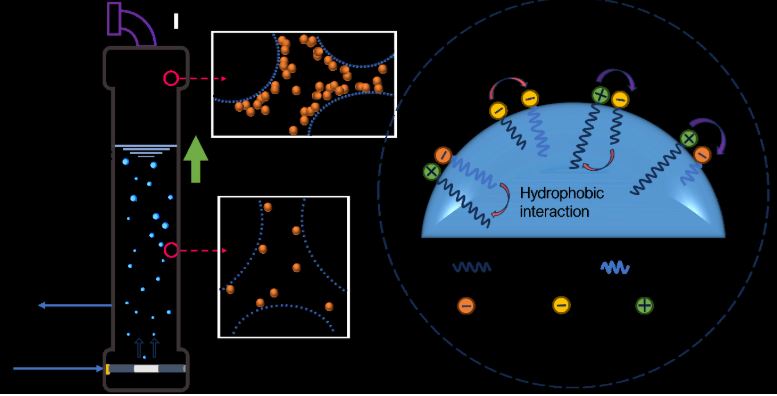
organic matters or disinfection. With respect to foam fractionation, the high
surface areas and hydrophobicity of nanobubbles could effectively adsorb and
immobilize hydrophobic organic contaminants such as PFAS. This project embarks
on nanobubbles to establish foams in water and remove PFAS via a green fractionation
separation process that appear to have low energy footprints and leave no chemical
residuals. Besides research efforts, new course modules and hands-on experiments
will be developed to integrate the research activities into student engagement and education.
Undergraduates and graduates in different STEM disciplines (e.g., civil, chemical and
environmental engineering) will be recruited to participate in the research project tasks
under PI's team's mentorship.