https://journal.ugm.ac.id/jfs/article/view/107148
The increased demand for red tilapia (Oreochromis niloticus) production requires a sufcient supply of highquality juveniles. Technological innovation is crucial for developing quantifable, highly productive, efcient, environmentally sustainable, and ecologically sound juvenile production systems. This study aimed to analyse the effect of high stocking densityon the growth performance of red tilapia juveniles cultured using ultrafne bubble technology in a recirculating aquaculture
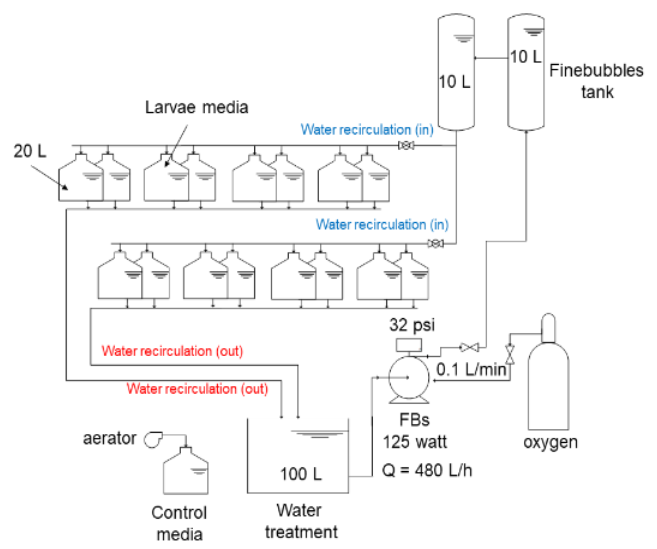
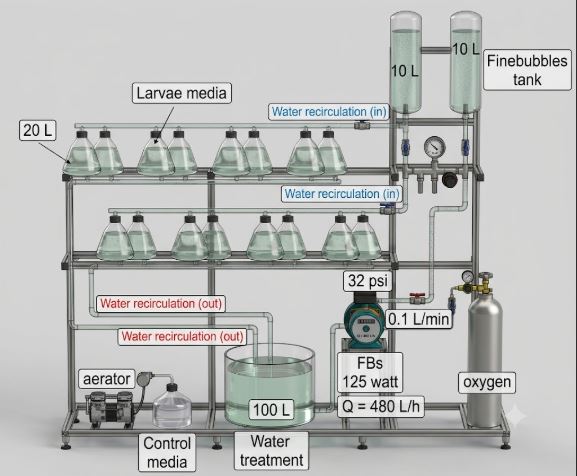
system (UFBs-RAS). A completely randomised experimental design was used with four stocking density treatments: one control
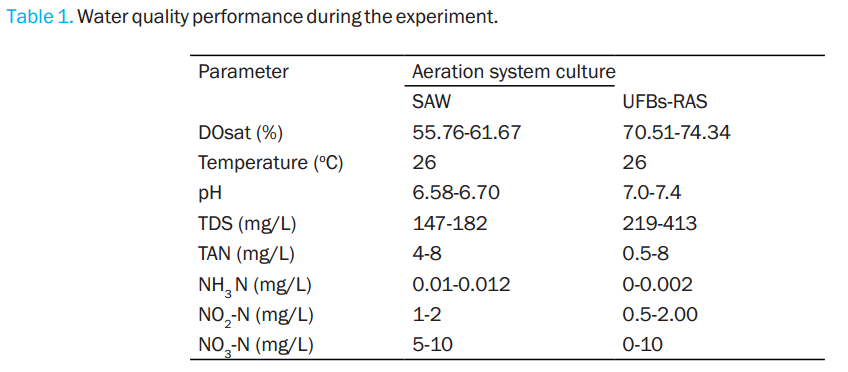
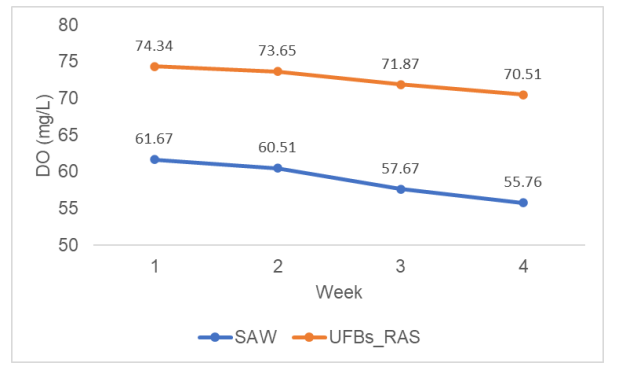
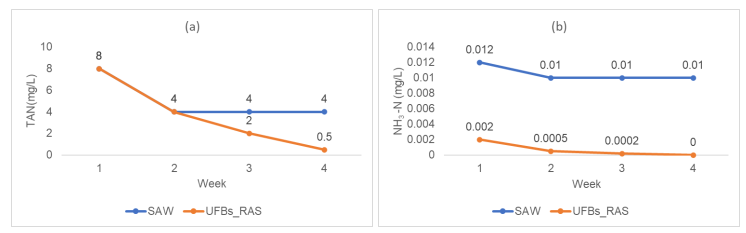
treatment (4 fsh/L with aeration) and three treatments under the UFBs-RAS system at 4, 6, and 8 fsh/L densities. Each treatment
was replicated four times. The juvenile red tilapia used in this study had an average initial total length of 4.34 ± 0.23 cm and a
weight of 1.47 ± 0.31 g. They were obtained from fshpond research at the FINDER UCoE Experimental Station, Universitas
Padjadjaran. The fndings indicated that UFBs-RAS facilitated optimal production performance, even at the maximum stocking
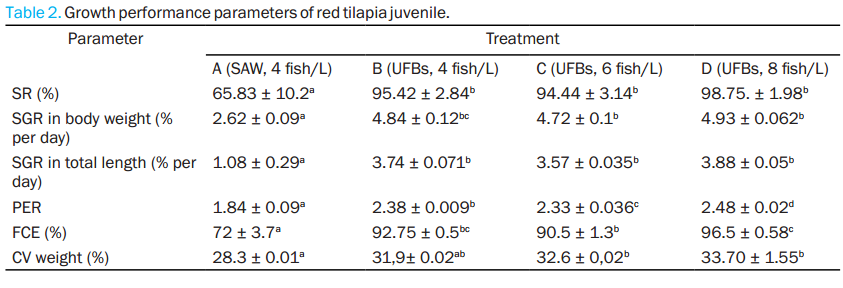
density of 8 fsh per liter. The performance metrics comprised a survival rate of 98.75%, a specifc growth rate in weight of 4.93 ±
0.062%/d, a specifc growth rate in length of 3.88 ± 0.05%/d, a protein efciency ratio of 2.48 ± 0.02, a feed conversion efciency
of 96.5 ± 0.58%, and a coefcient of variation of 33.7 ± 1.2%. These data validate that incorporating UFBs-RAS is a viable and
efcient method to improve the quality and productivity of red tilapia juveniles.