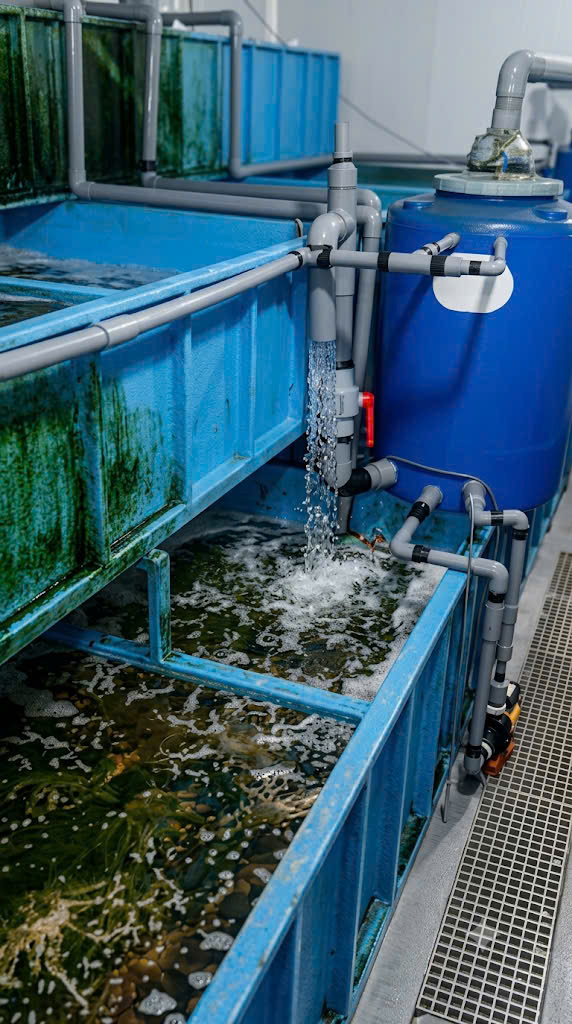
DIY Protein Skimmer of 30 m3/h by Mr Hieu, Vietnam who has been using our Ven X MM20 mili-microbubbler
45 second contact time
500L water tank and 1 hp water pump
#kingcrab #squid
A counter-current protein skimmer is one of the most valuable water treatment components in a life support system (LSS) for live king crabs because it continuously removes dissolved and suspended organic waste before it decomposes. This is particularly important since king crabs are highly valuable, consume protein-rich diets, and are very sensitive to deteriorating water quality during long-term holding.
Main benefits
1. Removes dissolved organic compounds (DOC)
A counter-current protein skimmer efficiently removes:
* Proteins
* Amino acids
* Mucus
* Blood from injured crabs
* Waste released during molting
* Small particles from uneaten feed
These compounds attach to fine air bubbles and are carried into the foam collection cup before bacteria can break them down.
Benefits
* Lower ammonia production
* Lower biological oxygen demand (BOD)
* Cleaner water
* Reduced unpleasant odor
2. Improves water clarity
King crabs are usually displayed in chilled seawater.
Protein skimming removes:
* Fine suspended solids
* Organic colloids
* Tiny fats and oils
The result is:
* Crystal-clear water
* Better customer presentation
* Easier health inspection of crabs
3. Reduces ammonia formation
Instead of allowing proteins to decompose into
Protein → Ammonia → Nitrite → Nitrate
the skimmer removes much of the protein beforehand.
Benefits include:
* Reduced ammonia spikes
* Less stress on nitrifying biofilters
* More stable nitrogen cycle
* Lower frequency of water exchange
4. Increases dissolved oxygen
The thousands of fine bubbles provide additional gas exchange.
Benefits include:
* Higher dissolved oxygen
* Better respiration
* Increased activity
* Lower stress
Although oxygen transfer is not the skimmer's primary role, it provides a useful supplemental effect.
5. Removes excess carbon dioxide
Counter-current skimmers are very efficient gas strippers.
They remove:
* CO₂
* Volatile organic compounds
* Some dissolved gases causing odor
Lower CO₂ leads to:
* More stable pH
* Improved oxygen uptake
* Better crab metabolism
6. Stabilizes pH
By continuously stripping excess CO₂:
* pH fluctuations decrease
* Buffer consumption is reduced
* Water chemistry becomes more stable
This is especially important in chilled systems where gas exchange can be slower.
7. Reduces bacterial growth
Protein skimmers reduce the organic "food" available to bacteria.
Consequences include:
* Lower heterotrophic bacterial populations
* Less cloudy water
* Reduced oxygen consumption by bacteria
* Lower risk of opportunistic bacterial infections
8. Helps prevent shell fouling
Organic particles can settle on crab shells and gills.
Cleaner water results in:
* Cleaner shells
* Cleaner gills
* Better oxygen uptake
* Improved appearance for sale
9. Reduces foaming in tanks
Removing dissolved proteins minimizes uncontrolled surface foam in holding tanks.
10. Improves efficiency of ozone (if used)
Many commercial seafood LSS combine:
* Counter-current protein skimmer
* Ozone
* UV sterilizer
The skimmer:
* Maximizes ozone contact efficiency
* Removes oxidized organic compounds
* Helps eliminate residual ozone before water returns to the holding tanks (when properly designed with degassing)
11. Reduces pathogen load
Although not a sterilizer, protein skimming can remove:
* Bacteria attached to organic particles
* Protozoa
* Organic debris that shelters pathogens
This indirectly reduces disease pressure.
12. Better survival during long-term holding
For king crabs held for several days to weeks before sale, maintaining excellent water quality is critical.
Benefits include:
* Reduced stress
* Better feeding behavior (if fed)
* Lower mortality
* Reduced limb loss
* Better market quality
* Higher economic return