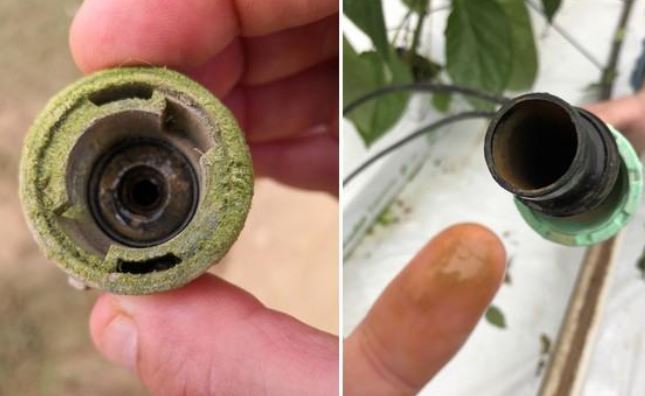
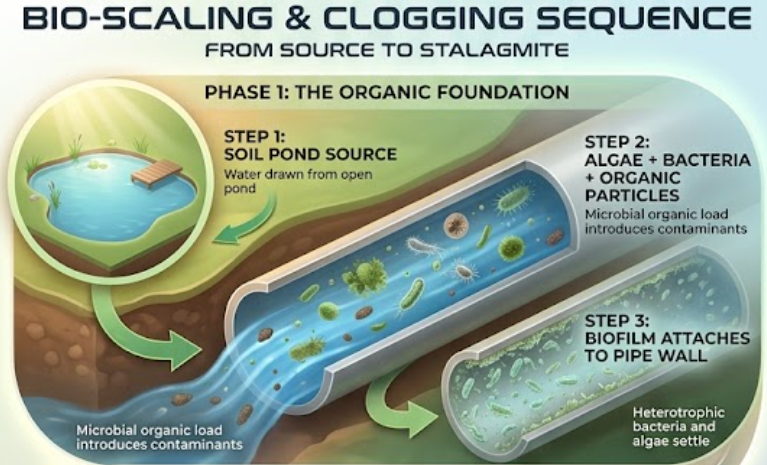
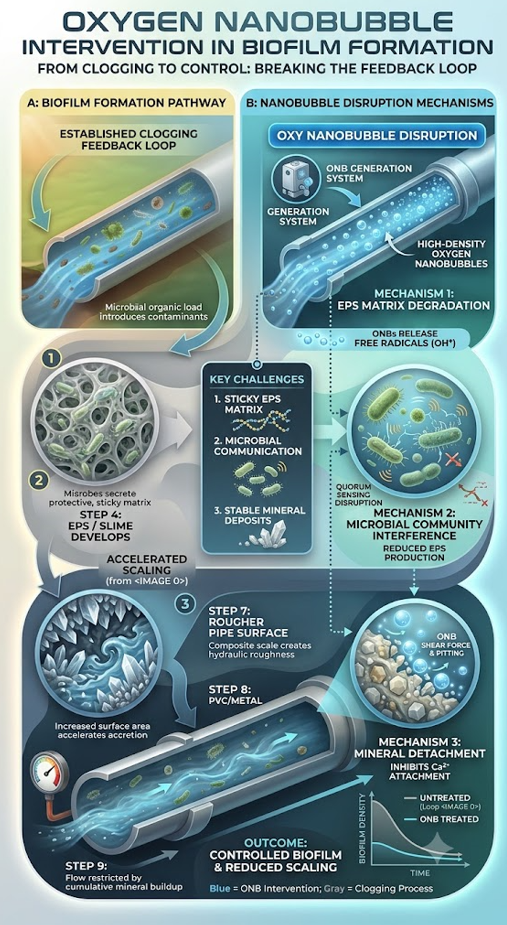
Small delivery tubings and pipelines in hydroponic and drip irrigation farms can develop sequence of biofilm fouling as below
→ algae + bacteria + organic particles
→ biofilm attaches to pipe wall
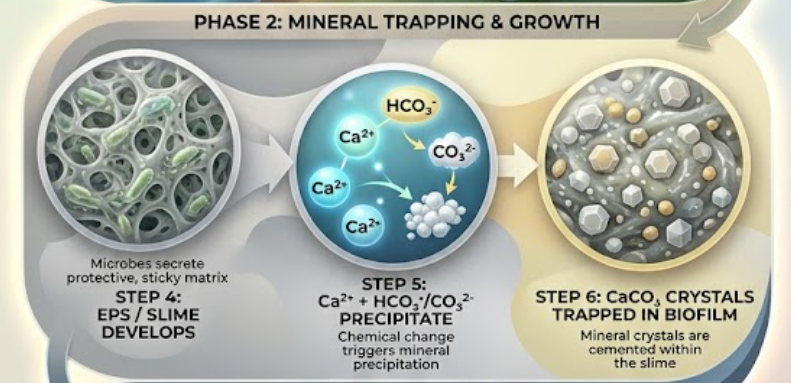
→ EPS/slime develops
→ Ca²⁺ + HCO₃⁻/CO₃²⁻ precipitate
→ CaCO₃ crystals become trapped in biofilm
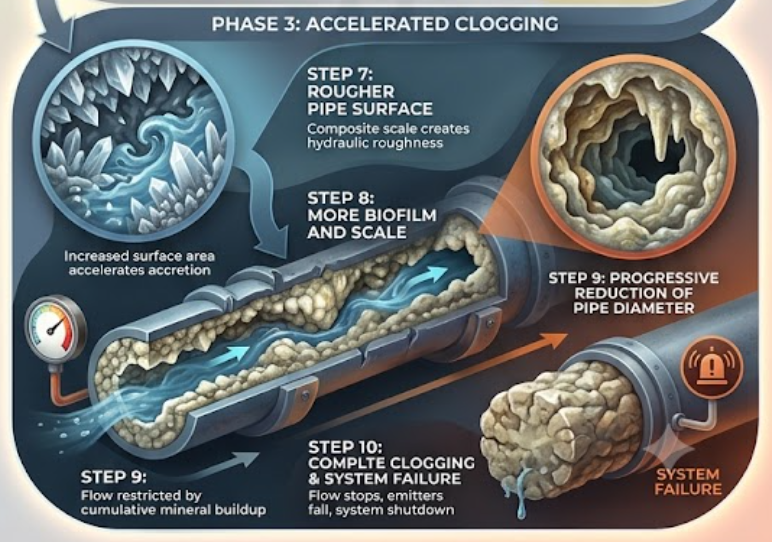
→ rougher pipe surface
→ more biofilm and scale
→ progressive reduction of pipe diameter.
Oxygen nanobubbles can interfere with the microbial community and extracellular polymeric substances (EPS)—the sticky matrix that makes biofilm adhere to PVC/HDPE/metal surfaces.
The agricultural irrigation study found that nanobubbles reduced biofilm biomass and disrupted the microbial interactions responsible for maintaining the biofilm structure.
Public reference : https://pubmed.ncbi.nlm.nih.gov/32402981/
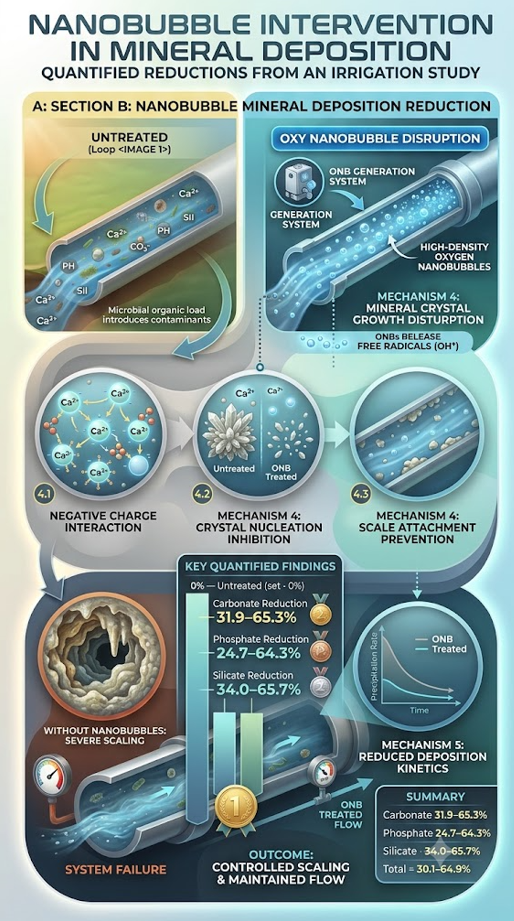
Nanobubbles have negatively charged interfaces that can interact with Ca²⁺ and alter the precipitation/crystal-growth process. Compared with untreated water, the irrigation study measured reductions of approximately:
- Carbonate: 31.9–65.3%
- Phosphate: 24.7–64.3%
- Silicate: 34.0–65.7%
- Total mineral deposition: 30.1–64.9%
Public reference:
https://www.sciencedirect.com/science/article/pii/S0160412019347567?via%3Dihub
Nanobubbles should primarily be considered a prevention or control technology, not a replacement for descaling a pipe that is already heavily plugged.
When existing pipeline is already badly restricted with biofouling, it is recommended to perform mechanical flushing / pigging / appropriate acid descaling
and then introduce continuous or periodic Oxygen Nanobubble treatment to prevent recurrence.


