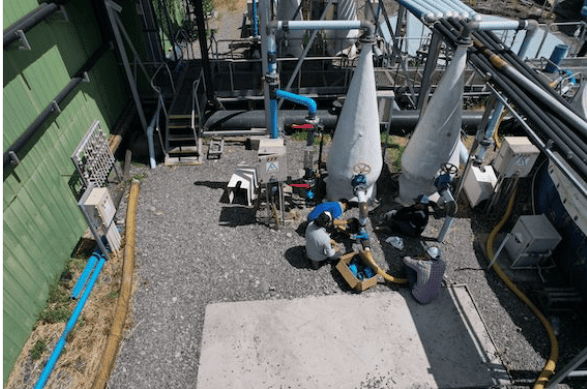
The application of nanobubbles in fish farming can significantly increase fish biomass. Research conducted by Austral Plus in Nalcahue shows that exposing smolt to nanobubbles increased the growth rate of fish by 40% compared to fish that were not exposed to nanobubbles.
The system was installed in 11 ponds of a line consisting of 22 ponds x 60 m3 with densities between 14 and 47 kg/m3 of coho salmon. Meanwhile, the other line continued to operate with the two cones.
.png)
In addition to the increase in biomass, energy consumption decreased from 15 kW/h to 7.5 kW/h, which corresponds to a net energy saving of 7.5 kW/h or a 50% reduction. With the same oxygen levels, but in more adverse conditions, where we had a summer season marked by high temperatures and heat waves, with a temperature increase of 1.16 °C compared to the previous year, we achieved this increase in smolt biomass of 40%, allowing us to maintain and improve crops, despite changes in global temperatures.
With this technology, fish farmers can produce more fish in less time and with fewer resources, which translates into greater profitability and a lower environmental impact.
“Nanobubbles are an effective tool to improve water quality and fish growth, resulting in more sustainable and profitable production,” says Javier Ulloa, general manager of Austral Plus.
The aquaculture industry is undergoing a significant shift towards sustainability and innovation, and nanobubble technology is proving to be a major breakthrough in fish production.