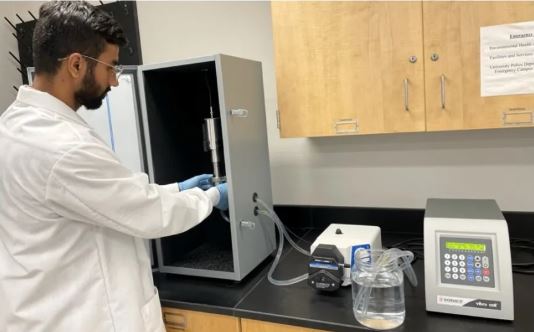
Maneesha Mohan has been researching nanobubbles and how they could impact the efficiency of dairy wastewater treatment.
https://www.feedstuffs.com/agribusiness-news/nanobubbles-improve-dairy-wastewater-treatment
Nanobubbles, which are 2,500 times smaller than a grain of salt, have been
utilized in a wide variety of ways in different industries for the past few years.
As dairy manufacturing grows, so does their effluent — or liquid waste discharge
— treatment plant issues. A lot of companies don’t have the scale to increase
their waste treatment at the same scale that they are increasing production
....
In dairy effluent treatment, the high levels of organic acid, minerals and other
matter makes it hard to be treated.
“There will be a lot of organic solids in your effluent and a lot of the cleaning
minerals, acids and alkali that actually makes it very hard to handle the
effluent,” Mohan said.
Dairy processing plants are often making multiple products, which means
they have huge fluctuations in the amounts of organic matter and wastewater
that they have. Sometimes, these processing facilities don’t have time to
handle the waste, and they must hire someone to haul it away, which is
expensive
Dairy wastewater, if not properly cleaned, also becomes an environmental
problem because it is discharged into bodies of water.
“It will affect whatever aquatic life and any other, you know, plants and
animals that are surrounding these water bodies as well,” Mohan said.
Of course, the plants have to meet EPA standards, Mohan said, but it’s
better to keep the nitrates, phosphates and all organic matter much
below those levels
By using nanobubbles, they are able to improve the efficacy of water
treatment. The nanobubbles interact with the organic matter and minerals.
“They break it down and oxidize it, so basically, the effluent treatment
plant can more efficiently handle all the effluent that the dairy processing
plant is producing,” Mohan said.
There has been a lot of industry interest in this research, Mohan said.
Valley Queen Cheese in Milbank, South Dakota, has been an industry
collaborator in Mohan’s research. The company installed a nanobubble
generator. They were able to test the efficacy of the nanobubble
generator in the company’s effluent plant
“It actually improves the efficacy quite a bit,” Mohan said.
There has been a 15 to 20% decrease in volume of biology oxygen
demand and chemical oxygen demand after using the nanobubbles.
Using air is a relatively inexpensive way to get this level of improved
efficacy. It is also a more sustainable solution rather than hauling the
wastewater away.
“Which is significant thinking that nanobubbles are pretty environment
friendly because for that project we only used air as nanobubbles,”
Mohan said. “We can use a number of gases, but it’s much more
cheaper to use air.”
This technology is very new, but Mohan says she anticipates other
dairy companies will start utilizing nanobubbles in the effluent plants
in the future. She says they need more studies researching nanobubbles
as well