Pilot project uses nanobubble technology to battle algae blooms in Manitoba lake
https://www.cbc.ca/news/canada/manitoba/lake-killarney-nano-tech-bubbles-1.7561217
After years of trying everything from aerators to chemical treatments, a southwestern
Manitoba lake plagued by stubborn algae is testing a new solution — bubbles too small
to see.
Betty Sawatzky, Killarney Lake Action Committee chair, said cyanobacteria, also known
as blue-green algae, is a problem in Prairie lakes.
"It's a turquoise colour and it's toxic," she said. "You're at the mercy of the wind, at the
heat, humidity, the nutrients that go into the lake."
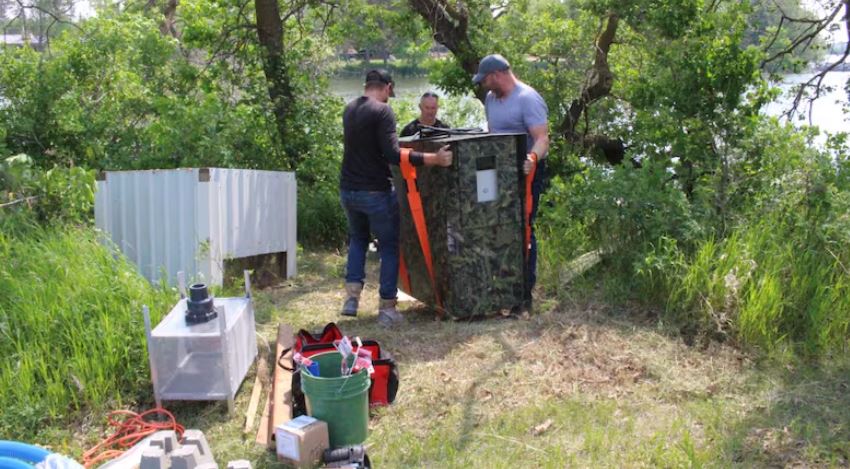
To improve water quality and prevent harmful algae growth, a nanobubble unit is being
installed in Killarney Lake. Sawatzky said the pilot project is the first of its kind in Manitoba
and uses technology that infuses water with ultra-fine oxygen bubbles, which stay
suspended longer than traditional aeration systems.
Sawatzky said that helps disrupt the conditions that fuel algae blooms. The project
is part of a broader push to find eco-friendly, science-backed solutions that support
the lake's ecosystem
Killarney Lake has struggled with algae blooms for years, leading to beach closures
and fish kills, Sawatzky said. An aeration system added in 2017 helped prevent
closures and fish deaths, but algae still return.
Sawatzky said the nanobubble system uses the same concept as the current
aeration system — just on a much smaller scale. It disperses bubbles throughout
all levels of the lake to reduce the available phosphorus that feeds algae blooms.
"You've got those tiny micro bubbles at the bottom, in the middle and towards the top
.... It can work to break down those extra nutrients that feed the cyanobacteria that
feed the algal blooms," she said. "If you can stop the food source of these algal
blooms ... you solve your problem."
After three years of research to find an eco-friendly and cost-friendly solution for
the algae, the committee partnered with Calgary's SWAT Water Technology to test
nanobubble technology in a six-month pilot project, said volunteer Shane Warnez.
The unit, which was placed in a small section of the lake known as the Bay Friday,
is just a little bigger than a dehumidifier and has two hoses.
One draws water in and injects it with oxygen bubbles, and the other hose sends
it back into the lake.
Warnez said the lake may look worse at first, with some foaming, but if it works, the
water should clear.
"It'll be very obvious, because there will be less algae, and as a result, the lake will look
a lot cleaner and clearer," he said. "It's really esthetics that we're looking at."
Water testing will track phosphorus and dissolved oxygen levels. The trial cost about
$11,000, with SWAT Water Technology lending the machine at no cost. The main
expenses are water testing and about $2,500 in electricity, which the local agricultural society is covering.