PROBLEM IDENTIFICATION STEPS
Measure and monitor key water quality parameters (pH, DO, NH3/TAN)
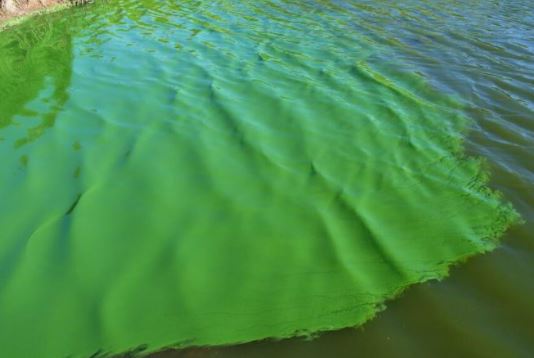
Learn to recognize different Algae types and suitable levels in pond
Water clearance measurement
Secchi disk
.png)
.png)
NAKASHIMA PROPOSAL
For Prevention and Mitigation
For Emergency
For Reactive and Periodical Control:
Ozone Nanobubbles or Air Nanobubble + H2O2
USEFUL FEATURES OF FINE BUBBLES
Nanobubbles (< 1 micrometer) and Microbubbles (10-60 micrometers) with slow rising velocities can remain and be suspended for a period of time long enough to be spread by water flow currents created by the fine-bubbled-water flow and the paddle wheels (the most commonly used in outdoor aquaculture)
Fine-bubbled water is made near the bottom sludge to provide necessary dissolved oxygen to the fish/shrimps and nitrification process supported by microbiome in the bottom sludge
For reduction and control of harmful bacteria and vibrio, Ozone Nanobubbles or Air Nanobubbles plus Hydrogen Peroxide can be used with caution.
Safer and more controllable sterilization effect by Ozone Nanobubbles or Air Nanobubbles (plus H2O2) can be performed in Protein Skimmers (or so-called Foam Fractionators) where suspended dirts after oxidization can be expelled at once out of the skimmed water while the ORP (oxidization-reduction potential) of the skimmed water can be measured and monitored (not to exceed 300…350mV)
| Cause | What happens in the pond |
|---|---|
| Excess nutrients | Feed waste, feces and decomposing organic matter release N and P → rapid algae growth |
| High feeding intensity | More uneaten feed + metabolic waste → more nutrients available to algae |
| Low water exchange | Nutrients continuously accumulate instead of being exported |
| Strong sunlight | High light intensity accelerates photosynthesis and algal multiplication |
| Warm water | Many phytoplankton species reproduce rapidly at elevated temperatures |
| High alkalinity / suitable pH | Provides favorable conditions for phytoplankton growth |
| Sediment nutrient release | Anaerobic or nutrient-rich bottom soil can release ammonium and phosphate back into the water |
| Poor competition | Low zooplankton/macrophyte/bacterial competition allows certain algae to dominate |
| Mixing disturbances | Wind, aeration or bottom disturbance can resuspend nutrients from the sediment |
Such cycle can be simplified as: Feed → feces/decomposition → NH₄⁺ + PO₄³⁻ → algae bloom
The dangerous part is often not the bloom itself, but the crash.
A. Nutrient exhaustion
A very dense algal population consumes nutrients faster than they are replenished.
High algae → nutrients become limiting → algae become stressed → mass mortality
B. Cloudy weather / heavy rain
This is particularly important in outdoor ponds.
Several hours or days of low sunlight can dramatically reduce photosynthesis.
At the same time:
- fish/shrimp continue consuming O₂
- bacteria continue decomposing organic matter
- dead algae begin decomposing
- oxygen production from photosynthesis falls
So: Cloud/rain → ↓ photosynthesis + continued respiration → ↓ DO
C. Very high daytime pH
A dense algae population can drive daytime pH very high because photosynthesis removes CO₂.
Then at night: algae + bacteria + animals → respiration → CO₂ ↑ → pH ↓
Large pH/DO swings are therefore a warning sign of an unstable algal pond.
D. Temperature shock
Rapid changes in temperature can stress the dominant algae. This can occur during:
- heavy rain
- cold fronts
- extreme heat
- sudden weather changes
A stressed algal population can collapse quickly.
E. Toxic or harmful algae
Some cyanobacteria and other algal species can produce toxins or become dominant under particular nutrient and environmental conditions. Their collapse can also release organic material and, in some cases, intracellular compounds into the water.
A typical sequence is:
1. Excess nutrients
↓
2. Rapid algae growth
↓
3. Very high daytime photosynthesis
↓
4. Large DO and pH fluctuation
↓
5. Weather disturbance / nutrient depletion / algal stress
↓
6. Algae die
↓
7. Bacteria decompose dead algae
↓
8. Huge oxygen demand
↓
9. DO falls, especially before sunrise
↓
10. Fish/shrimp stress or mortality
The critical point is that dead algae become an additional BOD/COD load.
A soil pond has a second nutrient reservoir that a highly controlled tank system doesn't have: the bottom sediment.
Organic sludge can accumulate around:
- feeding areas
- auto-feeders
- pond corners
- low-flow zones
The sediment can contain large quantities of:
- organic carbon
- ammonium
- phosphate
- sulfide
- reduced iron/manganese compounds
Under anaerobic conditions, some of these compounds can be released back into the water.
So you can have: water column nutrients + sediment nutrients → repeated algae blooms
This is why simply removing algae from the water doesn't necessarily solve the underlying problem.
For intensive fish/shrimp ponds, I would monitor these together rather than looking at algae color alone:
DO
- especially pre-dawn DO
- large day/night fluctuation is a warning
pH
- large morning-to-afternoon swing suggests strong photosynthetic activity
Secchi depth / water transparency
- sudden reduction can indicate rapid bloom development
TSS
- high suspended solids can carry organic matter and nutrients
NH₄-N / TAN
NO₂-N
Alkalinity
Chlorophyll-a, if available
Bottom sludge condition
Fine-bubble systems do not directly solve the nutrient cause of an algae bloom. Their strongest role is to make the pond more resilient:
fine bubbles → better oxygen distribution → less anaerobic bottom → faster aerobic decomposition → lower oxygen shock when algae die
They can be particularly valuable before and during periods of weather instability, when the pond is at greatest risk of an algae crash and pre-dawn oxygen depletion.